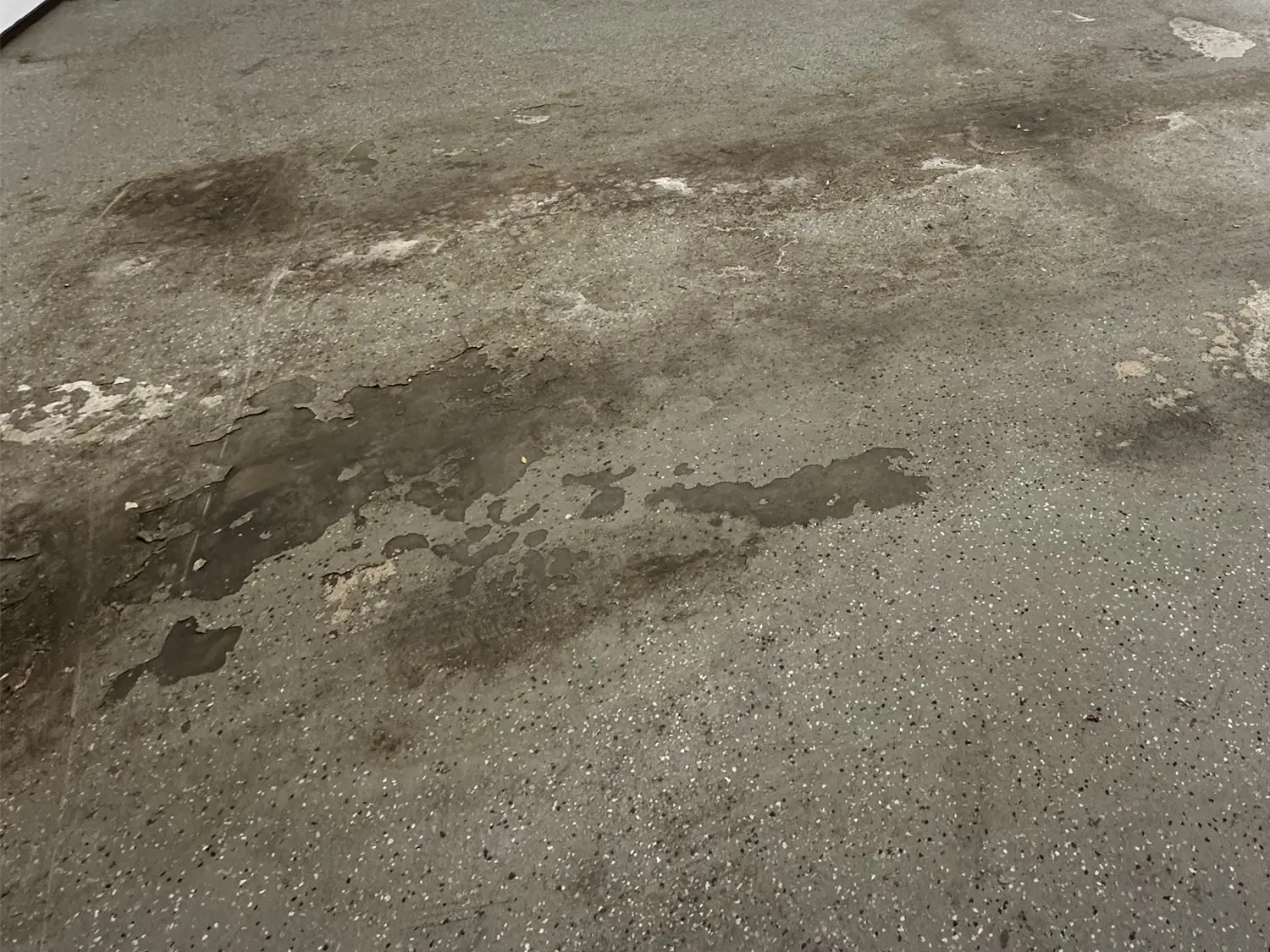
In Colorado, a garage floor isn’t just a slab of concrete; it’s a surface that battles some of the harshest conditions in the country. Between the shifting Rocky Mountain soil and the corrosive chemicals brought in by our winter tires, Colorado garage floors take a beating.
If your floor is looking tired, cracked, or “pitted,” you don’t necessarily need a new slab. You need a professional-grade restoration.
Why Colorado Concrete Fails: The “Front Range” Factors
Most homeowners assume a crack is just a sign of an old house. In Colorado, it’s usually the result of three specific environmental factors:
- The Freeze-Thaw Cycle: Colorado is famous for 60-degree days followed by 10-degree nights. When water or melted snow gets into tiny pores in your concrete and freezes, it expands, literally “blasting” the concrete apart from the inside out.
- Magnesium Chloride (Road Salt): The “mag-chlor” used by CDOT to de-ice I-25 and I-70 is brutal on concrete. It penetrates the surface and causes spalling—that flaky, peeling, or pitted look that makes a floor look ancient.
- Expansive Soils: From Castle Rock to Fort Collins, Colorado is known for bentonite clay. This soil expands when wet and shrinks when dry, causing your garage floor to shift and crack.
Our Concrete Restoration Process
We don’t just “paint over” the problem. At Colorado Custom Garages, we use a multi-step restoration process to ensure your floor is structurally sound before we ever apply a topcoat.
- Diamond Grinding (The Clean Slate)
We use industrial diamond grinders to remove the top layer of “laitance” (weak concrete) and salt-damaged surface. This opens the pores of the concrete so our repair materials can bond deep within the slab. - Crack Injection & Foundation Repair
We don’t use hardware-store caulk. We use high-performance polymer menders that “weld” the crack back together. This prevents water from getting back under the slab and causing further heave. - Pitting & Spalling Reconstruction
If your floor looks like the surface of the moon due to salt damage, we use a specialized concrete mender to “re-surface” those holes, creating a perfectly level, smooth substrate.
Why a “Patch” Isn’t Enough
Many homeowners try a DIY patch kit, only to see it pop out the following winter. Why? Because a patch doesn’t stop the cause of the damage—moisture and salt.
The Ultimate Solution: By following up a professional repair with our Polyaspartic Coating, you are essentially “shrink-wrapping” your garage floor.
- Waterproof Seal: No more melt-water getting into the concrete pores.
- Chemical Shield: Road salts sit on top of the coating where they can be easily squeegeed out, rather than eating the concrete.
- Structural Integrity: Our coatings add a layer of impact resistance that standard concrete simply lacks.
Frequently Asked Questions (FAQ)
Can a badly cracked garage floor be saved?
In 95% of cases, yes! Unless the slab is physically sinking or has major structural heaving, our grinding and polymer-injection process can make a damaged floor look brand new again.
Why is my garage floor "flaking" or "dusting"?
This is likely “spalling” caused by salt damage or a poor original concrete pour. We can grind away that weak layer and reinforce the surface.
How long does a repair and coating take?
For most Colorado garages, we can complete the repairs and the full Polyaspartic coating in just one day.
Don’t Let a Small Crack Become a Big Replacement
Concrete replacement can cost $10,000 to $15,000 and weeks of downtime. Our restoration and coating process is a fraction of the cost and lasts decades.